Hey folks, if you’re munching on a bowl of popcorn right now or just curious about this beloved treat, you’re in for a treat. Popcorn has been popping up in our lives for thousands of years, from ancient rituals to modern movie nights. In this guide, we’ll explore everything popcorn-related—from its fascinating history to health perks, recipes, and even the booming industry stats as of 2025. I’ll keep things straightforward, like we’re chatting about our favorite snack. Let’s pop right in.
The History of Popcorn
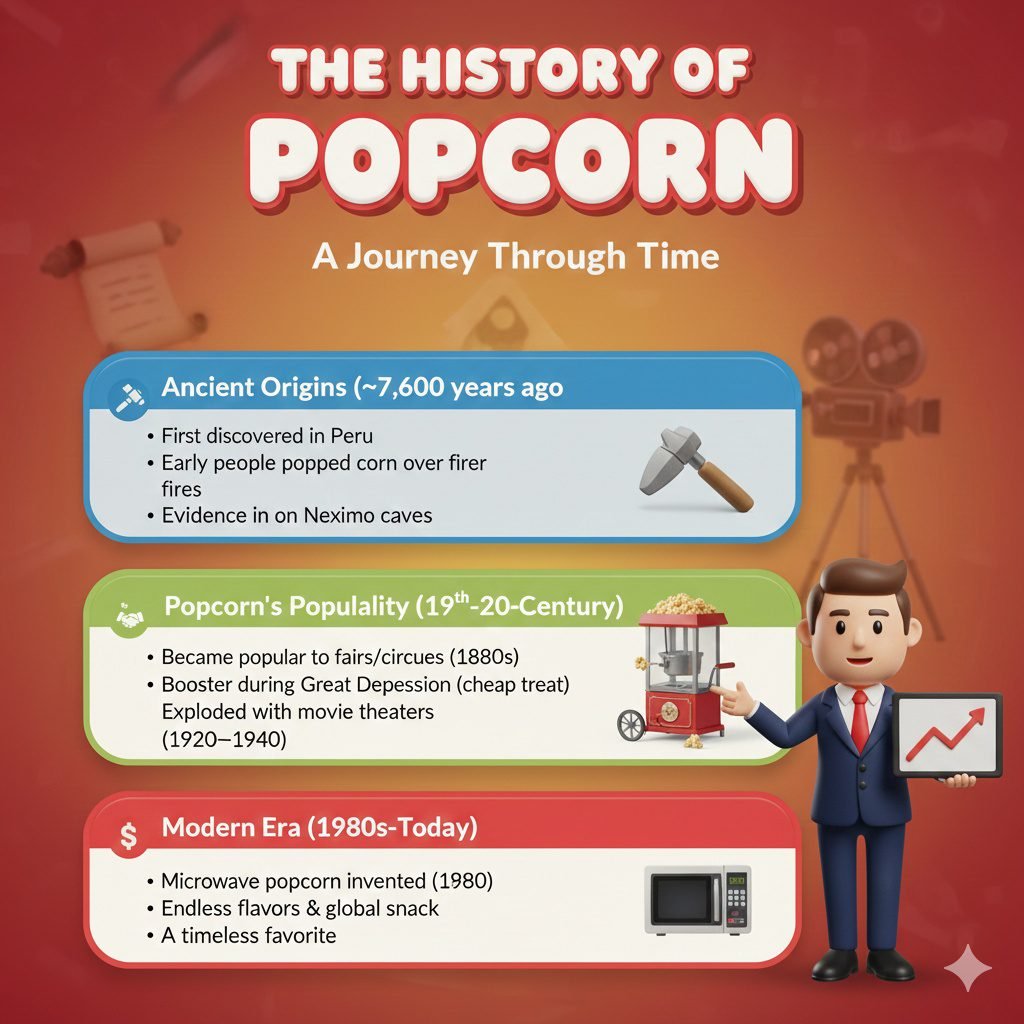
Popcorn’s story starts way back in ancient times. Archaeologists found evidence of popcorn in Mexico dating to around 3600 BCE, where early folks popped corn ears over fire. By the 16th century, Aztecs used popcorn in ceremonies, dancing with popcorn garlands and offering it to gods. Native American tribes like the Hopi and Zuni popped kernels for food and decoration too.
Fast-forward to the 19th century in the U.S., where popcorn became a street food hit. Vendors sold it at fairs and circuses. But it wasn’t always welcome in theaters. Early movie houses banned popcorn to keep floors clean, seeing it as low-class. That changed during the Great Depression. Popcorn was cheap—5 to 10 cents a bag—and theaters needed revenue. By the 1930s, it saved many cinemas from closing. World War II sugar rations boosted salty popcorn sales even more.
Today, on National Popcorn Day (January 19), we celebrate this evolution. In 2025, popcorn remains a staple, with innovations like gourmet flavors keeping it fresh.
Types of Popcorn Kernels
Not all popcorn is the same. Kernels vary by color, size, and shape when popped. Let’s break down the main varieties.
- Yellow Popcorn: The most common type, popping into large, fluffy pieces with a buttery taste. It’s what you find in movie theaters and microwave bags.
- White Popcorn: Smaller and more tender, with thinner hulls that don’t stick in your teeth. Great for lighter snacks.
- Mushroom Popcorn: Pops into round, ball-like shapes. Ideal for coatings like caramel or chocolate, as it holds flavors well.
- Ladyfinger Popcorn: Tiny kernels that pop small and delicate. Often called “hulless” (though all have hulls), it’s easy on the teeth.
- Colored Varieties: Red, blue, purple, or rainbow popcorn. Kernels are colorful, but pops white or yellow. They add fun visuals and subtle nutty flavors.
Choosing the right kernel depends on your use. For movie nights, go yellow; for gourmet treats, try mushroom.
Discover More Blogs : Totally Science Your Go-To Hub for Unblocked Games in …
How Popcorn Pops The Science Behind It
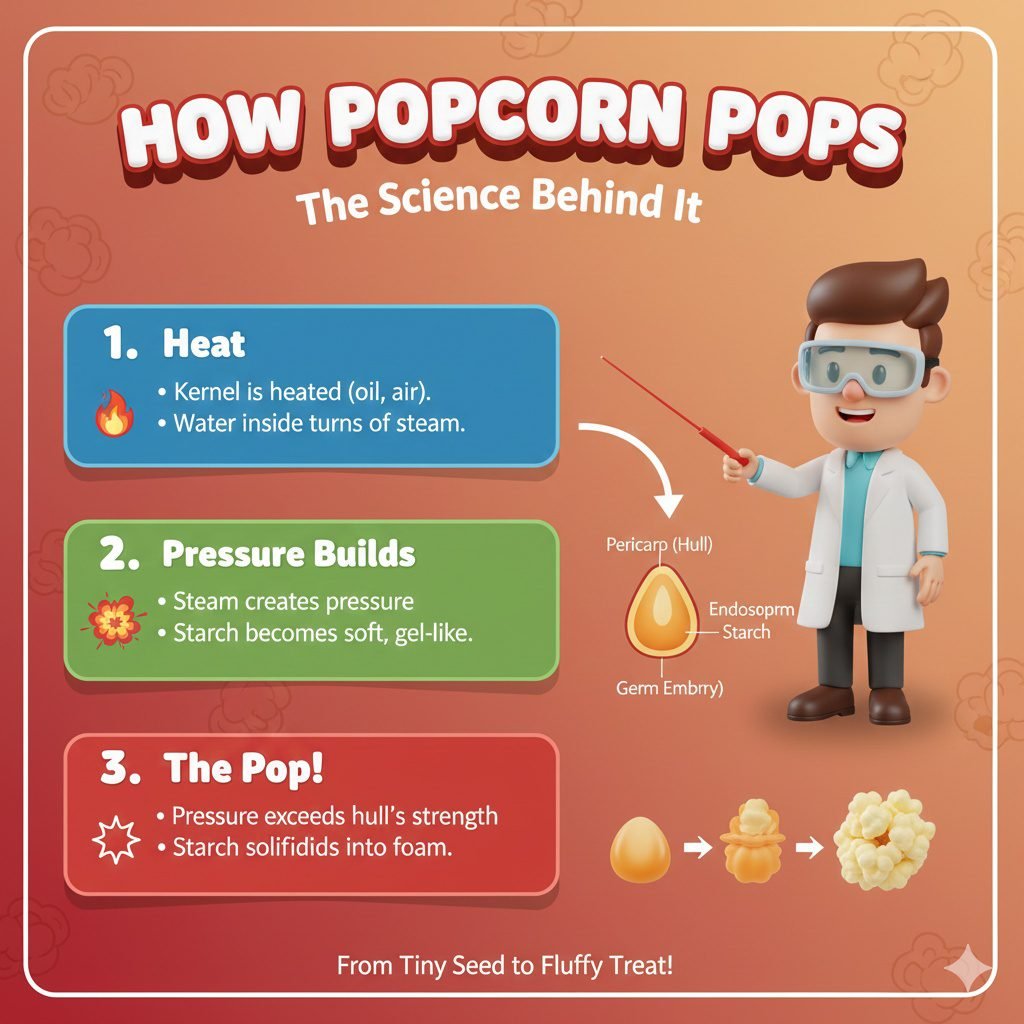
Ever wonder why popcorn explodes into fluffy goodness? It’s all about moisture and pressure.
Each kernel has a hard outer hull and starchy inside with about 14% water. When heated to around 350°F, that water turns to steam, building pressure up to 135 psi. Boom—the hull bursts, and the starch expands like a mini explosion, turning inside out.
Not every corn pops; only “popcorn” varieties have the right hull strength. Sweet corn or field corn won’t work—they just burn.
Fun experiment: Pop some at home on the stove. Use 3 tablespoons oil, 1/2 cup kernels, and shake the pot. Perfect popcorn every time.
Nutritional Facts and Health Benefits of Popcorn
Popcorn isn’t just tasty—it’s nutritious when prepared right. Plain, air-popped popcorn is a whole grain, low in calories, and packed with fiber.
A 3-cup serving has about 93 calories, 1g fat, 19g carbs, and 3g protein. It’s gluten-free and provides antioxidants like polyphenols, which fight inflammation.
Health perks include:
- Fiber Boost: High fiber aids digestion, lowers cholesterol, and helps control blood sugar. One serving gives 3.5g fiber—more than many veggies.
- Weight Management: Low energy density means you feel full on fewer calories. Studies link whole grains like popcorn to lower obesity risk.
- Heart Health: Antioxidants and fiber may reduce heart disease and diabetes risks.
- Antioxidant Power: More polyphenols than some fruits, potentially fighting cancer.
Watch out for movie theater popcorn—laden with butter and salt, it can hit 1,000 calories. Opt for homemade.
Here’s a quick nutrition table for 3 cups air-popped popcorn:
| Nutrient | Amount | % Daily Value |
|---|---|---|
| Calories | 93 | 5% |
| Fat | 1.1g | 2% |
| Carbs | 19g | 6% |
| Fiber | 3.6g | 14% |
| Protein | 3g | 6% |
| Iron | 0.8mg | 4% |
| Magnesium | 36mg | 9% |
Popcorn in Culture and Movies
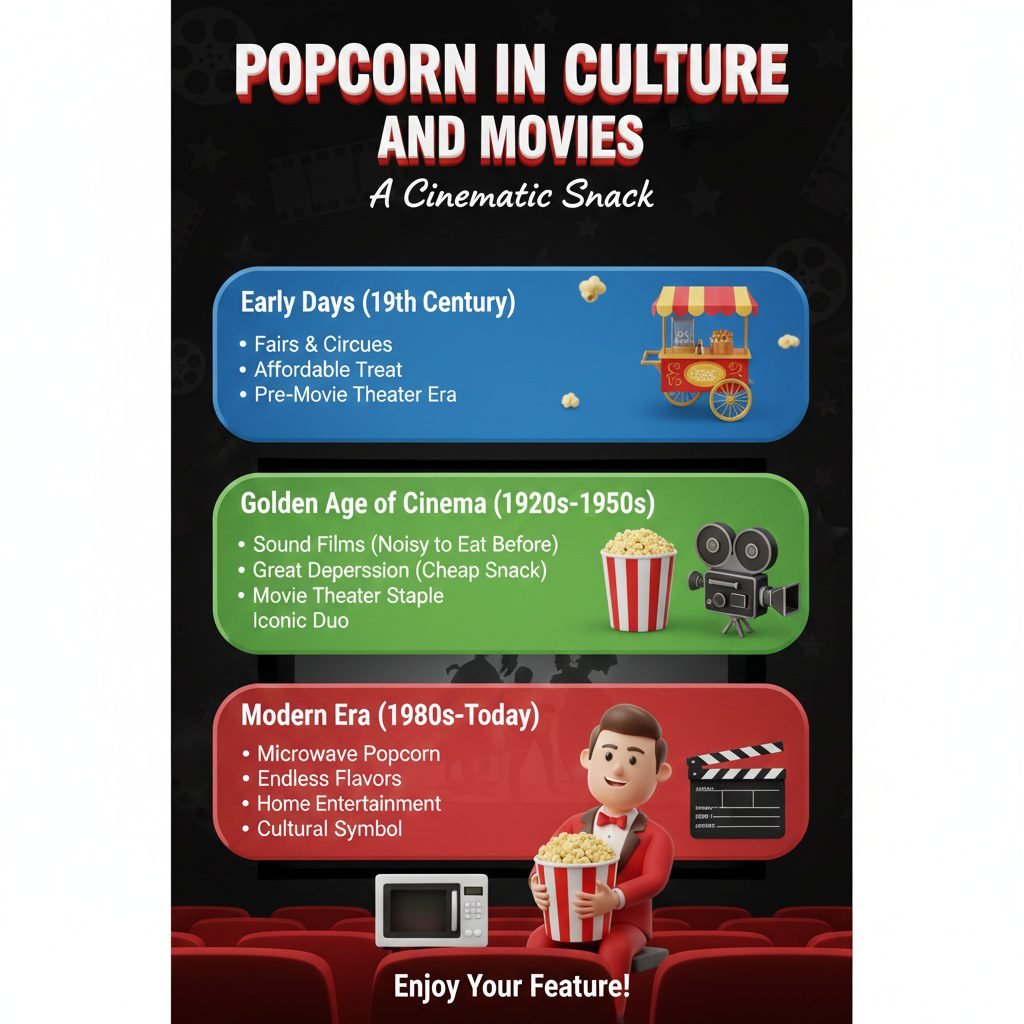
Popcorn and movies are inseparable. But why? During the Depression, it was affordable and profitable for theaters. By the 1940s, it was a staple, with sales booming post-WWII.
In culture, popcorn appears in festivals and art. Aztecs used it in headdresses. Today, it’s in holidays like Halloween with popcorn balls.
Fun facts: Nebraska produces the most U.S. popcorn. Americans eat 15 billion quarts yearly—that’s 43 quarts per person!
The Popcorn Industry Today
In 2025, the global popcorn market is thriving. Valued at $4.55 billion, it’s projected to hit $6.86 billion by 2032, growing at 5-8% CAGR. The U.S. leads, with demand reaching $3.38 billion in 2025, up to $7.52 billion by 2035.
Ready-to-eat popcorn dominates 68% of the market, thanks to flavors like cheese and caramel. Health trends boost organic and low-cal options.
More Blogs Read : https://cinebench.org/payday-loans-eloanwarehouse/
Production dipped slightly in 2024 but rebounded. Key players include ConAgra and Weaver Popcorn.
| Region | 2025 Market Size (USD Billion) | Projected 2030/2035 |
|---|---|---|
| Global | 4.55 | 6.86 (2032) |
| U.S. | 3.38 | 7.52 (2035) |
| RTE Segment | ~4.4 (est.) | Growing at 8.5% |
Homemade Popcorn Recipes and Ideas
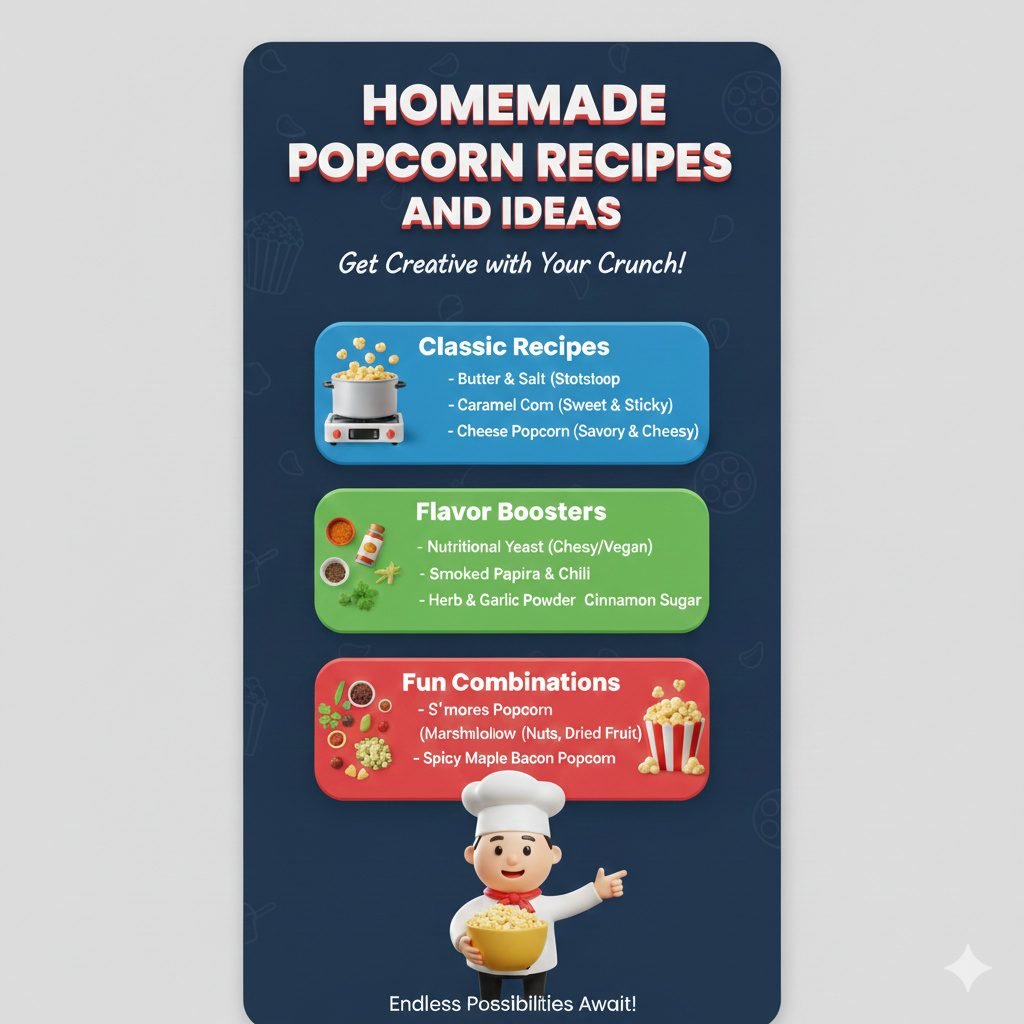
Making popcorn at home is easy and customizable. Start with basics: Heat oil, add kernels, season.
- Classic Butter Popcorn: Pop 1/2 cup kernels in 3 tbsp oil. Melt 2 tbsp butter, drizzle, add salt.
- Kettle Corn: Mix 1/2 cup kernels with 2 tbsp sugar and 3 tbsp coconut oil. Shake while popping for sweet-salty bliss.
- Cheesy Herb: Toss popped corn with grated Parmesan, thyme, garlic powder, and a spray of oil.
- Spicy Honey: Brown butter, add honey, cardamom, cayenne. Pour over popcorn.
- Cinnamon Sugar: Bake popped corn tossed in butter, cinnamon, and sugar at 250°F for 20 min.
Try gourmet: Chocolate-drizzled or buffalo wing-seasoned. Use microwave bags for quick fixes.
Fun Facts About Popcorn
- Popcorn is over 5,000 years old, found in ancient Peruvian tombs.
- It’s the official snack of Illinois.
- Unpopped kernels are “old maids.”
- Eating whole grains like popcorn could save a million lives yearly worldwide.
- Bryan Adams hates popcorn’s smell!
Final Thoughts
Popcorn is more than a snack—it’s a cultural icon, health hero, and industry giant. From ancient pops to 2025’s $4.55 billion market, it adapts while staying simple. Enjoy it mindfully: Go for air-popped, experiment with flavors, avoid excess salt or butter. Whether at movies or home, popcorn brings joy. Next time you hear that pop, appreciate its journey. Stay crunchy!
More Blogs Now : History of Languages A Fascinating Journey Through Time
Frequently Asked Questions (FAQs)
1. Is popcorn healthy?
Yes, air-popped popcorn is a low-calorie whole grain with fiber and antioxidants, but watch toppings.
2. What are the main types of popcorn kernels?
Yellow, white, mushroom, ladyfinger, and colored varieties like red or blue.
3. How did popcorn become a movie snack?
It was cheap during the Depression, helping theaters profit despite initial bans.
4. What’s the global popcorn market size in 2025?
Around $4.55 billion, projected to grow to $6.86 billion by 2032.
5. How do I make homemade kettle corn?
Pop kernels with sugar and coconut oil on the stove for a sweet-salty treat.