Hey there, ice cream fans and business watchers. Imagine walking into your local pharmacy for a quick prescription pickup, only to grab a scoop of that nostalgic, cylindrical ice cream on the way out. For many on the West Coast, that’s been a rite of passage with Thrifty Ice Cream at Rite Aid stores. But in 2025, bankruptcy forces ice cream chain to close 500 locations, shaking up this sweet tradition. This isn’t just about losing a treat—it’s a tale of retail struggles, corporate decisions, and what it means for everyday folks like you and me.
In this article, we’ll dive into what happened, why it did, and what’s next. I’ll break it down simply, with facts, stats, and even a timeline to make it easy to follow. Let’s scoop into the details.
More Articles Read Now : What is NCEdCloud? A Comprehensive Guide to North …
What Bankruptcy Forces Ice Cream Chain to Close 500 Locations Led to the Closures?
Back in May 2025, Rite Aid, the pharmacy giant, filed for Chapter 11 bankruptcy—for the second time in two years. This move directly impacted Thrifty Ice Cream, a beloved brand with counters in over 500 Rite Aid locations, mostly on the West Coast. Bankruptcy forces ice cream chain to close 500 locations as Rite Aid shuttered hundreds of stores to cut costs and pay down massive debts.
Rite Aid’s first bankruptcy hit in October 2023, wiping out $2 billion in debt and closing hundreds of underperforming stores. But by 2025, they were back in court with liabilities between $1 billion and $10 billion. The company cited “evolving retail and healthcare landscapes,” low cash reserves, and intense competition from bigger players like CVS and Walgreens. As part of the restructuring, Rite Aid auctioned off assets, including Thrifty Ice Cream’s manufacturing plant in El Monte, California.
The closures weren’t overnight. Rite Aid started announcing store shutdowns in waves, with 123 locations listed in June 2025 alone across eight states. By October 2025, the chain closed all remaining stores, marking the end of an era. For Thrifty, this meant saying goodbye to those in-store counters where customers scooped flavors like rainbow sherbet or butter pecan.
A Brief History of Bankruptcy Forces Ice Cream Chain to Close 500 Locations
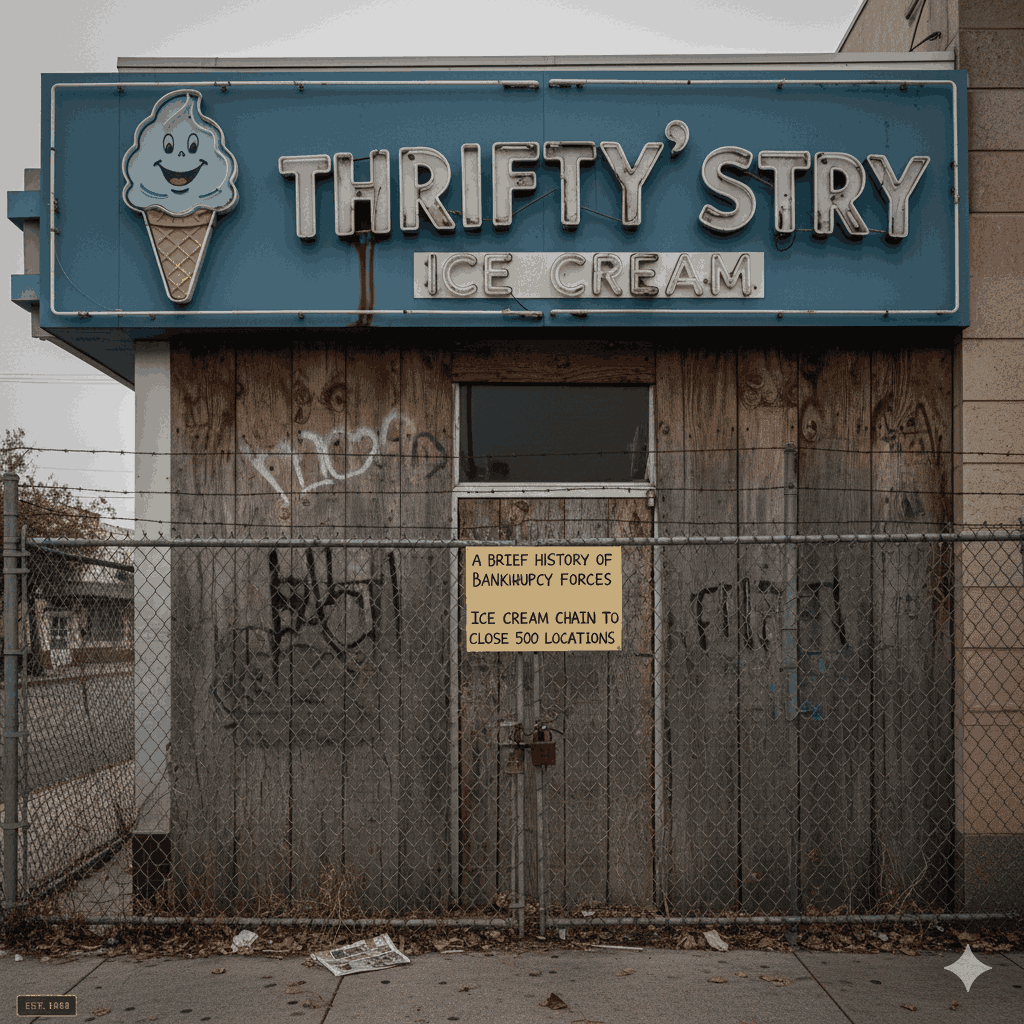
Thrifty Ice Cream isn’t some new kid on the block. It started in 1940 in Los Angeles, born from a factory in West Hollywood and first served at a Thrifty Drug Store in downtown LA. The brand quickly became a California icon, known for its affordable prices—scoops were just 5 cents back then—and unique cylindrical scoops, pushed straight down with a special tool that uses body weight for perfect portions.
Over the decades, Thrifty won awards, celebrity shoutouts (Kourtney Kardashian loves the rainbow sherbet), and a cult following. They experimented with wild flavors like Chuck E. Cheese birthday cake (launched in 2024), Sriracha Swirl, and even bacon and cheddar. By the 1990s, Thrifty was available in over 2,300 grocery and chain stores nationwide, but the real charm was those pharmacy counters.
In 1996, Rite Aid scooped up Thrifty through its acquisition of the Thrifty PayLess chain for about $2.3 billion. This integrated Thrifty into Rite Aid’s West Coast pharmacies, turning routine errands into treat opportunities. For nearly 30 years, it was a match made in retail heaven—until bankruptcy forces ice cream chain to close 500 locations.
More Blogs : https://cinebench.org/popcorn-the-ultimate-guide/
Why Did Rite Aid Go Bankrupt?
Let’s talk numbers because they tell the story. Rite Aid reported $750 million in losses in the year before its 2023 filing. Even after restructuring, debt lingered at $2.5 billion by 2024. The pandemic didn’t help—while some retailers boomed, drugstores faced slumping sales in non-essential items and rising costs.
Broader trends played a role too. The retail sector saw 23,309 business bankruptcies in the 12 months ending March 2025, according to court data. That’s up from previous years, with mega-filings surging. In the first half of 2025 alone, 371 corporate bankruptcies were recorded—the highest since 2010. Rite Aid wasn’t alone; chains like CVS and Walgreens also closed locations post-pandemic due to underperformance.
Opioid lawsuits added pressure. Rite Aid settled claims but at a cost. Competition from Amazon Pharmacy and Walmart’s health services squeezed margins. CEO Matt Schroeder noted in a statement: “While we have continued to face financial challenges, intensified by the rapidly evolving retail and healthcare landscapes, we are encouraged by meaningful interest from potential acquirors.”
In short, bankruptcy forces ice cream chain to close 500 locations because Rite Aid needed to slim down to survive—or in this case, to be sold off in pieces.
Timeline of Key Events
To make this clearer, here’s a table outlining the major milestones:
| Date | Event | Details |
|---|---|---|
| 1940 | Thrifty Ice Cream Founded | Launched in LA with 5-cent scoops at Thrifty Drug Stores. |
| 1996 | Acquired by Rite Aid | Part of $2.3B Thrifty PayLess deal; integrated into pharmacies. |
| October 2023 | First Bankruptcy Filing | Rite Aid files Chapter 11, closes hundreds of stores, reduces $2B debt. |
| May 2025 | Second Bankruptcy Filing | Liabilities $1B-$10B; plans to close 300+ stores and auction assets. |
| June 2025 | Auction Process Begins | Thrifty brand and El Monte factory up for bids; 123 stores slated for closure. |
| July 2025 | Thrifty Sold | Hilrod Holdings LP buys the brand; counters begin closing. |
| August 2025 | Major Closures | Many West Coast Rite Aid stores shut, ending in-store Thrifty service. |
| October 2025 | All Rite Aid Stores Close | Final shutdowns complete the bankruptcy process. |
This timeline shows how quickly things unfolded, turning a stable brand into a closure casualty.
Impact on Employees and Communities

When bankruptcy forces ice cream chain to close 500 locations, it’s not just about ice cream—it’s about people. Rite Aid employed over 45,000 people pre-bankruptcy. Closures meant layoffs, though the company aimed to “preserve jobs for as many associates as possible.” In California alone, hundreds of pharmacy workers lost positions, with ripple effects on local economies.
Communities felt it too. In neighborhoods where Rite Aid was the go-to for meds and treats, closures left gaps. One X user lamented: “Rite Aid closing means no more Thrifty scoops while waiting for prescriptions—end of an era!” (from a post in May 2025). For low-income areas, losing affordable ice cream options hit hard, as Thrifty was known for budget-friendly indulgences.
On the positive side, Thrifty tubs are still sold at thousands of retailers like grocery stores. The sale to Hilrod Holdings ensures production continues, potentially expanding beyond Rite Aid.
Customer Reactions and Alternatives
Fans were vocal. Social media buzzed with nostalgia. Evan Lovett, host of L.A. in a Minute, said on X: “If history is any guide, Thrifty Ice Cream is going to be scooping up smiles for years to come, just maybe not at your local Rite Aid.” Others shared stories of childhood visits, with flavors like chocolate malted crunch evoking memories.
If you’re missing those counters, here are alternatives:
- Grocery Stores: Pick up Thrifty tubs at chains like Ralphs or Safeway.
- Stand-Alone Shops: A few independent Thrifty locations remain in California.
- Similar Brands: Try Baskin-Robbins for variety or Dreyer’s for affordable scoops.
- Homemade Options: Use a cylindrical scooper (available online) to recreate the experience at home.
Bankruptcy forces ice cream chain to close 500 locations, but it opens doors for new ways to enjoy old favorites.
Discover More Blogs : Seekde Revolutionizing Digital Discovery in 2025
The Sale and Future of Thrifty

In July 2025, Hilrod Holdings LP bought Thrifty for an undisclosed sum. This private equity firm specializes in consumer brands, so there’s hope for revival. The El Monte factory stays operational, producing for retail distribution.
What could the future hold? Perhaps more flavors, online sales, or partnerships with other chains. Industry experts predict growth, as the U.S. ice cream market hit $7.4 billion in 2025, up 0.9% from the prior year. Globally, it’s $43.9 billion, growing at 5.3% annually.
Broader Implications for Retail and Ice Cream Industry
This story fits a bigger picture. Retail bankruptcies spiked in 2025, with over 6,000 store closures in the first half alone. Factors like e-commerce rise (Amazon’s share hit 40% of U.S. online sales) and inflation pressured brick-and-mortar spots.
For ice cream, trends lean toward healthier options—think low-sugar, plant-based, or functional flavors with probiotics. Indulgent treats persist, but sustainability matters: 60% of consumers prefer eco-friendly brands, per a 2025 Statista survey.
Bankruptcy forces ice cream chain to close 500 locations, highlighting how tied brands can fall with their parents. It reminds us to support locals, like independent creameries growing 5.8% annually.
How Chapter 11 Bankruptcy Works

Curious about the process? Chapter 11 lets companies reorganize while operating. Steps include:
- Filing Petition: Company declares bankruptcy in court, listing assets/debts.
- Automatic Stay: Halts creditor actions.
- Reorganization Plan: Propose how to pay debts, often by selling assets.
- Creditor Vote: Approval needed.
- Court Confirmation: If okayed, plan executes—closures, sales, etc.
Rite Aid used this to slim down twice, but ultimately closed all stores. It’s a tool for survival, but not always successful.
Final Thoughts
Bankruptcy forces ice cream chain to close 500 locations, but Thrifty’s legacy endures. From 1940’s humble beginnings to 2025’s sale, it’s a reminder of retail’s fragility. As we move forward, cherish local spots and adapt to changes. Who knows? Your next scoop might come from a revived Thrifty under new owners. Stay sweet, folks.
Frequently Asked Questions (FAQs)
1. Which ice cream chain closed 500 locations due to bankruptcy?
Thrifty Ice Cream closed its 500 in-store counters in Rite Aid pharmacies following Rite Aid’s 2025 Chapter 11 filing.
2. Is Thrifty Ice Cream still available?
Yes, tubs are sold at thousands of retailers, and the brand was acquired by Hilrod Holdings LP, ensuring continued production.
3. Why did Rite Aid file for bankruptcy?
Due to massive debts ($2.5B+), losses, competition, and evolving retail landscapes, including post-pandemic challenges.
4. What makes Thrifty Ice Cream unique?
Its cylindrical scoops, affordable prices, and flavors like rainbow sherbet, plus a history dating back to 1940.
5. How has the ice cream industry been affected?
The industry grows steadily at 4.2% annually in the U.S., focusing on health trends, but retail ties can lead to vulnerabilities like this.