Hey folks, if you’re here searching for info on an airplane crash, you’re not alone. Air travel is one of the safest ways to get around, but when things go wrong, it grabs headlines and sparks fear. As someone who’s followed aviation for years—reading reports, analyzing data, and even chatting with pilots—I’ll break it all down for you. We’ll cover what causes an airplane crash, key statistics, famous incidents, recent events, and how the industry keeps improving. Think of this as a friendly chat from an expert, using simple words to make it easy to follow. Let’s get into it, step by step.
What Is an Airplane Crash?
Simply put, an airplane crash happens when an aircraft hits the ground or another object unexpectedly, often causing damage or loss of life. It could be a full-blown disaster or a minor incident where everyone walks away. Crashes are classified by severity: accidents (with serious injury or death) and incidents (less severe, like a rough landing).
In aviation lingo, the FAA defines an accident as an event causing substantial damage or fatal injury during flight. Not all airplane crashes are fatal—many are survivable thanks to modern designs. For example, a bird strike might force an emergency landing, but that’s not always a crash. Understanding this helps demystify why flying remains safe despite occasional news stories.
Discover More Blogs : https://cinebench.org/virtual-meeting-etiquette/
Common Causes of Airplane Crashes
Most airplane crashes aren’t random; they stem from identifiable issues. Based on data from sources like the NTSB and FAA, here are the main culprits. I’ll explain each with examples for clarity.
Pilot Error
Pilot error tops the list, accounting for about 50-75% of crashes in general aviation. This includes misjudging weather, poor decision-making, or fatigue. In 2004, it was the primary cause in 78.6% of fatal general aviation accidents. Think of it like driving—humans make mistakes, but in the air, there’s less room for error.
- Example: A pilot flying into bad weather without proper instruments, leading to loss of control.
- Why it happens: Overconfidence, lack of training, or stress.
To visualize, here’s an infographic on common causes:
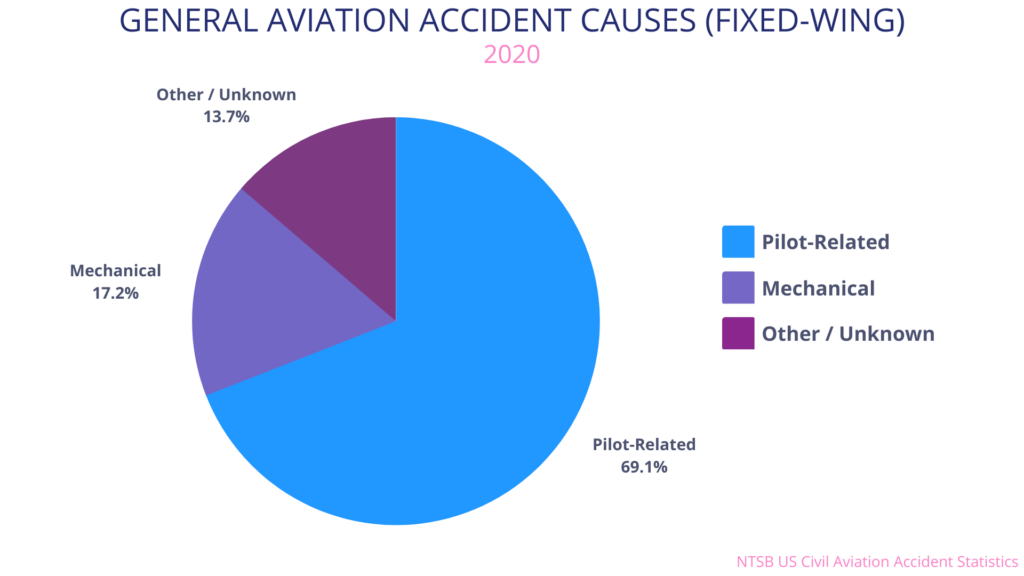
Aviation Accident Statistics Revealed
Mechanical Failure
Sometimes, it’s the machine. Engines fail, parts break, or systems glitch—about 20-30% of crashes. Modern planes have redundancies, like backup engines, but issues slip through.
- Example: A faulty sensor causing incorrect readings, as in some Boeing 737 MAX incidents.
- Prevention: Regular maintenance and inspections.
Weather Conditions
Mother Nature plays a role in 10-15% of cases. Thunderstorms, icing, or turbulence can overwhelm even skilled pilots.
- Example: Icing on wings reducing lift, leading to stalls.
- How it’s handled: Advanced weather radar and de-icing tech.
Human Error Beyond the Cockpit
This includes air traffic controllers (ATC) or ground crew mistakes, like wrong runway assignments.
- Example: Miscommunication causing runway incursions.
Other Factors
Less common but notable: Bird strikes, sabotage, or fuel exhaustion.
Here’s a table summarizing causes based on historical data:
| Cause | Percentage of Crashes | Example Incident |
|---|---|---|
| Pilot Error | 50-75% | Loss of control in flight |
| Mechanical Failure | 20-30% | Engine malfunction |
| Weather | 10-15% | Flight into thunderstorms |
| ATC/Ground Error | 5-10% | Runway confusion |
| Other (e.g., Birds) | <5% | Bird strike on takeoff |
These aren’t set in stone—many crashes involve multiple factors.
Famous Airplane Crashes in History
History is dotted with tragic airplane crashes that changed aviation forever. These incidents led to safety overhauls, saving countless lives. Let’s look at some of the deadliest.
Tenerife Airport Disaster (1977)
The deadliest airplane crash ever: Two Boeing 747s—one from KLM, one from Pan Am—collided on a foggy runway in Tenerife, Spain, killing 583 people. Miscommunication between pilots and ATC caused the KLM plane to take off while the Pan Am was still on the runway.
- Lessons learned: Improved radio protocols and “Crew Resource Management” training.
- Impact: No survivors on KLM; 61 on Pan Am.
Here’s a historical image from the site:
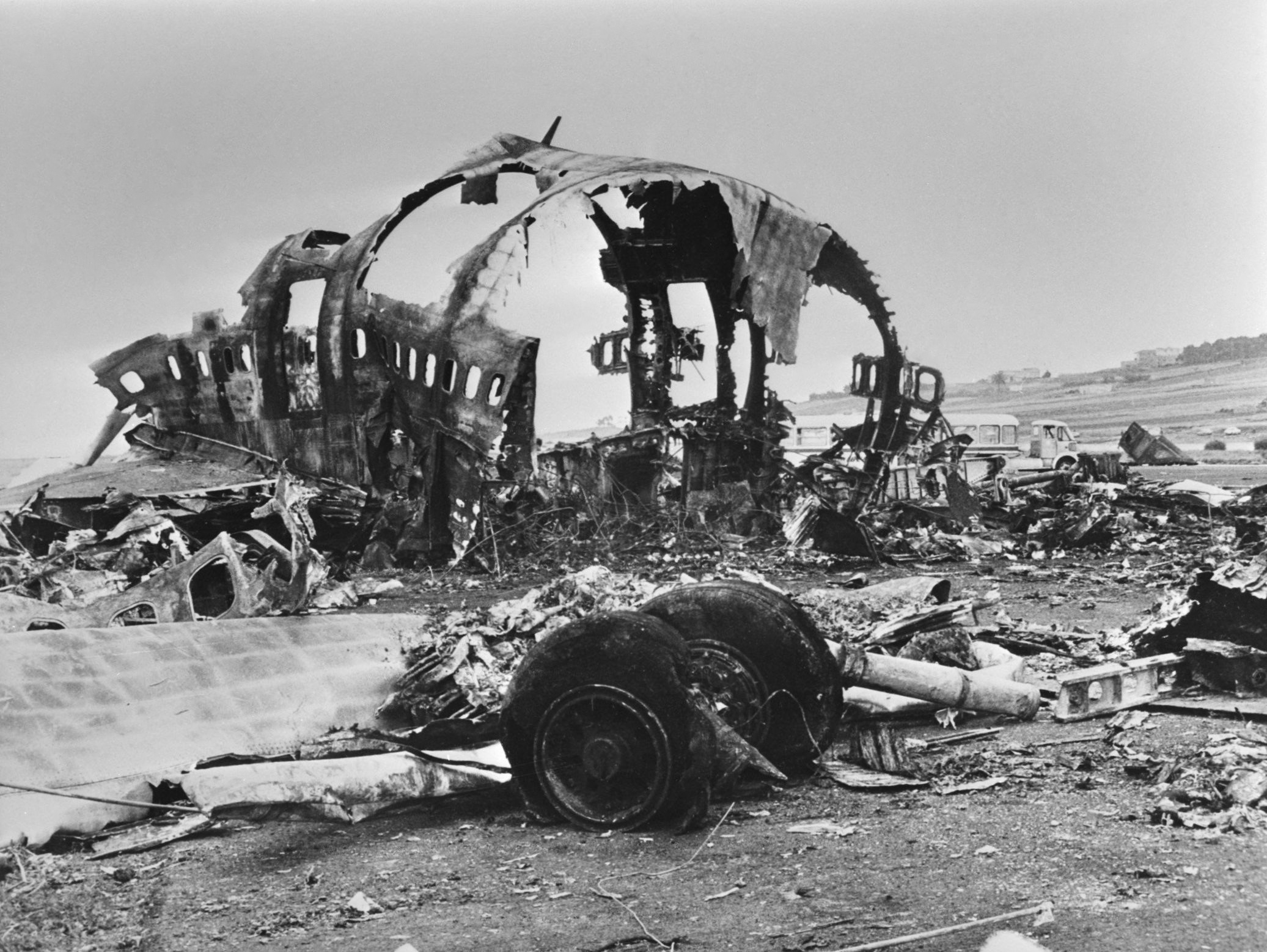
Tenerife airport disaster – Wikipedia
Japan Airlines Flight 123 (1985)
A Boeing 747 crashed into a mountain near Tokyo, killing 520. Cause: Faulty repair leading to rear pressure bulkhead failure.
- Survivors: Just 4 out of 524.
- Changes: Better maintenance checks.
American Airlines Flight 191 (1979)
Deadliest in US history: A DC-10 lost an engine on takeoff from Chicago, crashing and killing 271.
- Cause: Improper maintenance.
Other notables:
- Charkhi Dadri mid-air collision (1996): 349 deaths.
- Air India Flight 182 (1985): 329 deaths from bombing.
- 9/11 attacks (2001): Deliberate crashes killing thousands.
These stories remind us how far safety has come.
Statistics on Airplane Crashes
Numbers tell a positive story: Flying is safer than ever. Let’s crunch some data as of 2025.
Global stats: In 2024, there were few fatal commercial crashes. For 2025, the Aviation Safety Network reports 148 occurrences with 515 fatalities.
US-specific: 256 accidents in Q1 2025, lowest since 2014. But 188 deaths in 60 crashes overall. Fatal accidents: 13 in 2025 vs. 31 in 2024.
Per flight hours: 6.84 crashes per 100,000 hours, 1.19 fatal.
Here’s a table of fatal crashes by decade:
| Decade | Fatal Crashes | Total Fatalities | Notes |
|---|---|---|---|
| 1950s | High | Thousands | Early jet era |
| 1970s | 200+ | 10,000+ | Tenerife peak |
| 1990s | 150+ | 8,000+ | Improving tech |
| 2010s | <100 | <5,000 | Safer skies |
| 2020s | <50/year | <1,000/year | Post-COVID recovery |
And a chart for visual context:

Chart: Commercial Aviation Deaths Since 1942 | Statista
Odds of dying: 1 in 11 million annually, or 1 in 13.7 million per flight. Survivability: 95.7% if in a crash.
Compared to cars: You’re 816 million times safer flying.
More Reading Blogs Like : https://cinebench.org/unlocking-pc-power-your-ultimate-guide-to-cinebench/
Recent Airplane Crashes in 2025
2025 has seen its share of airplane crashes, mostly small planes. No major commercial disasters like past years, but incidents keep safety in focus.
- UPS Flight 2976 (Nov 4, 2025): MD-11 crashed near Louisville, killing 12.
- Air Busan Flight 391 (Jan 28): Details sparse, but notable.
- Rutan Long-EZ (Nov 20): Single fatality in South Carolina.
- Others: Ghana Air Force crash (Aug 6), Emirates incident (Oct 20).
Total US deaths: 188 in 60 crashes. Globally, 515 fatalities. Trend: Down from 2024.
How Safe Is Flying Today? Aviation Safety Improvements
Flying is safer than driving, thanks to ongoing improvements. The FAA analyzes data to spot risks.
Key advances:
- Better Investigations: Post-crash probes lead to changes.
- Tech Upgrades: AI for traffic control, reducing collisions.
- Training: Simulators for pilots.
- Runway Safety: Plans to cut excursions.
- EGPWS: Ground proximity warnings.
Over 50 years, US safety has improved dramatically. ICAO notes need for focus despite lows.
What to Do in Case of an Airplane Crash
Preparation saves lives. Listen to safety briefings—brace position, oxygen masks.
- During turbulence: Stay buckled.
- Evacuation: Leave bags, follow crew.
- Survival tips: Wear practical clothes, count rows to exits.
95.7% survivability proves it’s possible.
Most Common FAQs on Airplane Crash
What are the chances of dying in an airplane crash?
About 1 in 11-13 million per year. Safer than sharks or cars.
What is the deadliest airplane crash?
Tenerife 1977, 583 deaths.
How many airplane crashes in 2025?
148 globally, 515 fatalities. US: 60 with 188 deaths.
What causes most airplane crashes?
Pilot error, then mechanical issues.
Is flying safer now?
Yes, thanks to tech and regulations.
Survivability rate?
95.7%.
Recent crashes?
UPS in November, others small.
Final Thoughts
In wrapping up this look at airplane crash, remember: Incidents are rare, and aviation gets safer yearly. From Tenerife’s lessons to 2025’s data, the industry learns and adapts. If you’re nervous, focus on the odds—you’re safer in the sky than on the road. Fly smart, stay informed, and enjoy the view. Safe travels!
Pingback: TNXP Stock A Comprehensive Guide to Tonix Pharmaceuticals