

Hey there, if you’re a teacher, administrator, or parent searching for “smart pass,” chances are you’re curious about how this tech is shaking up school hallways. I’m here to chat about it like we’re grabbing coffee—straightforward, no jargon overload. Smart pass systems, like the popular SmartPass app, are digital tools that replace old-school paper hall passes with something smarter, safer, and way more efficient. In a world where schools juggle safety, accountability, and learning time, smart pass tech is a game-changer. This guide dives deep into what a smart pass is, how it works, its perks, and even some real-world stats from 2025. By the end, you’ll know if a smart pass is the right fit for your school. Let’s get started.
What Is a Smart Pass?
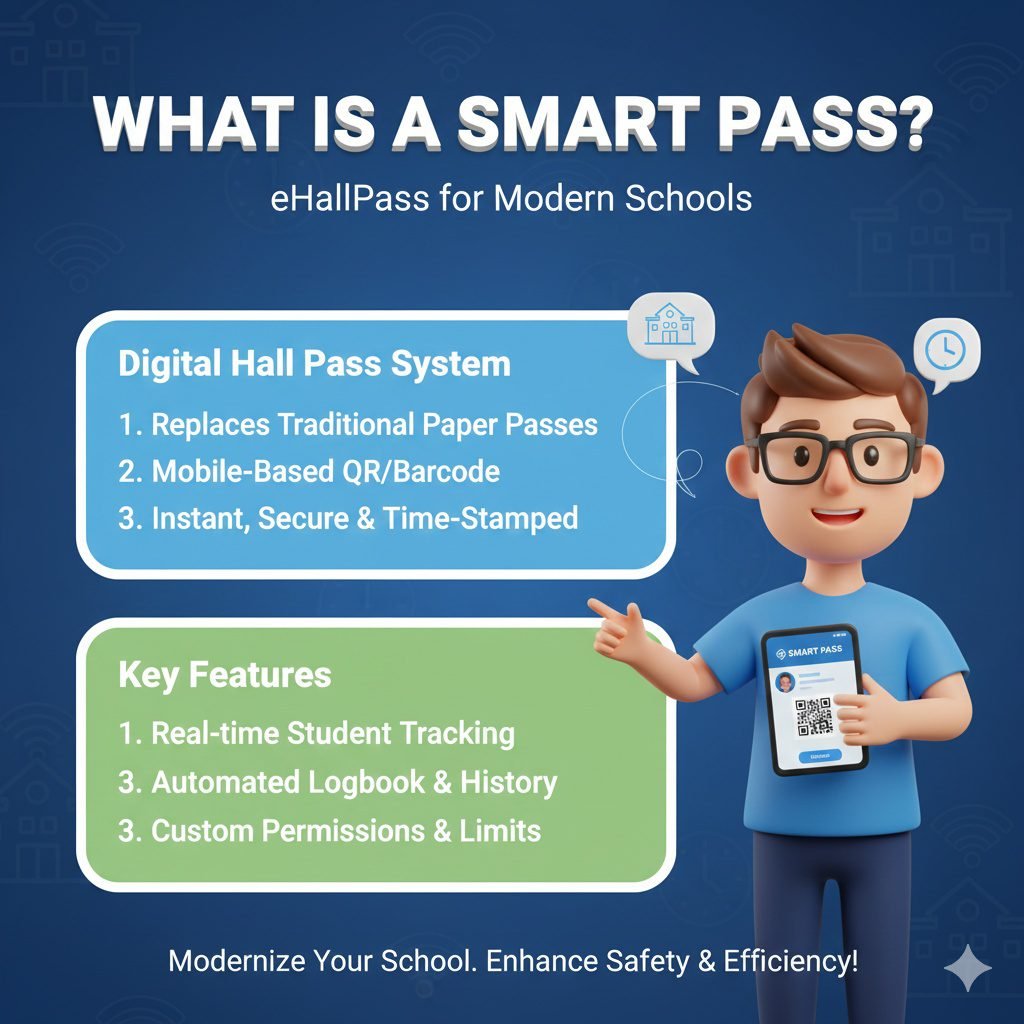
At its core, a smart pass is a digital hall pass system designed for K-12 schools. Think of it as an app or platform that lets students request permission to leave class—whether for the bathroom, nurse, or library—without scribbling on paper or grabbing a lanyard. The leading player in this space is SmartPass, founded in 2019 by Peter Luba, a Lehigh University grad who saw the chaos of traditional passes firsthand.
SmartPass isn’t just a pass issuer; it’s a full student accountability tool. Acquired by Raptor Technologies in December 2024, it now integrates with broader school safety systems. As of 2025, over 1,000 schools use smart pass tech like this, helping track where kids are during school hours. Why the buzz? Traditional passes get lost, forged, or ignored, leading to crowded halls and missed lessons. A smart pass fixes that with real-time tracking and data.
For example, imagine a high school where hallways turn into social hubs during class. With a smart pass, teachers approve requests digitally, and admins see patterns—like if one student wanders too often. It’s not Big Brother; it’s about keeping everyone safe and focused.
Discover More Blogs: PS6 Release Date & What PC Gamers
The Evolution of Hall Passes From Paper to Smart Pass
Hall passes have been around forever—think wooden blocks or signed notebooks from the 1800s. But by the 2000s, schools faced new challenges: vaping in bathrooms, bullying in halls, and post-pandemic safety worries. Enter digital solutions.
Smart pass tech emerged around 2015 with early apps, but SmartPass launched in 2019 amid rising school safety concerns. By 2020, COVID-19 accelerated adoption—contactless passes reduced germ spread. Fast-forward to 2025: The global edtech market hits $300 billion, with student management tools like smart passes growing at 15% yearly. Stats show 70% of U.S. schools now use some digital tracking, up from 40% in 2020.
SmartPass stands out with its user-friendly design. Co-founder Peter Luba credits his school experiences for inspiring features like pass limits and meetup detection. Today, it’s trusted in districts big and small, from urban hubs to rural spots.
How Does a Smart Pass Work?
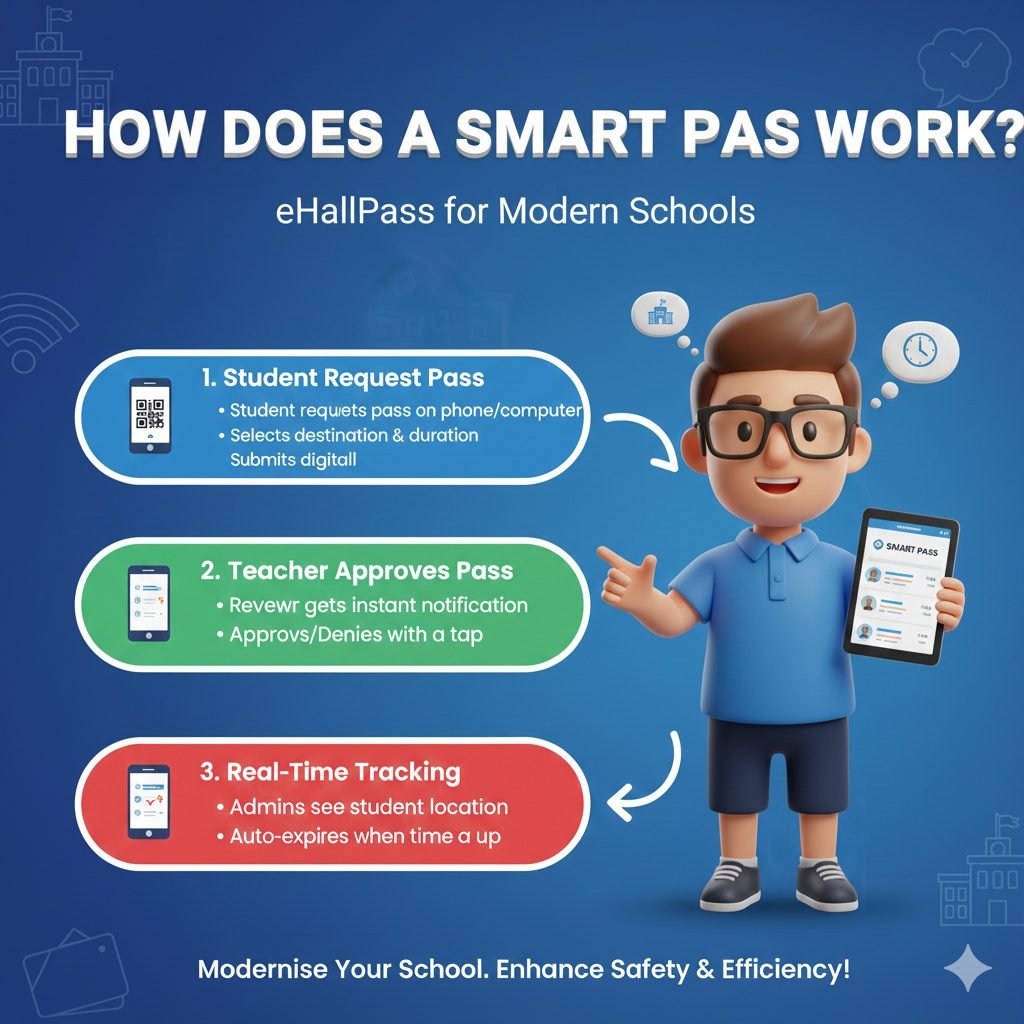
Using a smart pass is simple— no tech wizardry required. Here’s a step-by-step breakdown:
- Student Request: Kids log into the app on their phone, Chromebook, or school device. They pick a destination (e.g., restroom) and request a pass.
- Teacher Approval: The request pings the teacher’s dashboard. They approve or deny in seconds, adding notes if needed.
- Activation: Once approved, the pass starts a timer. Students show a QR code or digital badge if stopped by staff.
- Tracking: The system logs the pass in real-time. Admins can view active passes on a hall monitor view.
- End and Return: The pass auto-ends when the student returns or time’s up. Overdue alerts notify teachers.
SmartPass adds extras like kiosk mode for shared devices and ID scanning. It works on iOS, Android, and web— no fancy hardware needed beyond what’s in most schools.
Take Morris Jeff Community School in New Orleans: They implemented SmartPass in 2023. Director Kristen Pate says it “keeps hallways clear and kids learning.” In practice, it cut unauthorized wandering by 45%.
More Articles : https://cinebench.org/ups-careers/
Key Features of Smart Pass Systems
Smart pass tools pack a punch with features tailored for schools. Here’s what sets SmartPass apart:
- Digital Records: Tracks missed class time, helping spot chronic absentees.
- Pass Limits and Queues: Caps how many students can be out at once—say, two per class for bathrooms.
- Meetup Prevention: AI detects if students try to sync passes to the same spot, blocking shady meetups.
- Flex Integration: For flexible scheduling like clubs or makeup tests, post-2024 acquisition.
- Safety Tools: Integrates with emergency systems; reports suspicious patterns.
- Analytics Dashboard: Admins get reports on hall traffic, peak times, and more.
- Mobile App: Students and staff access via phones; includes hall monitor mode.
These aren’t bells and whistles—they solve real problems. For instance, the meetup blocker has reduced vaping incidents by alerting staff to group bathroom visits.
Benefits of Implementing a Smart Pass in Schools
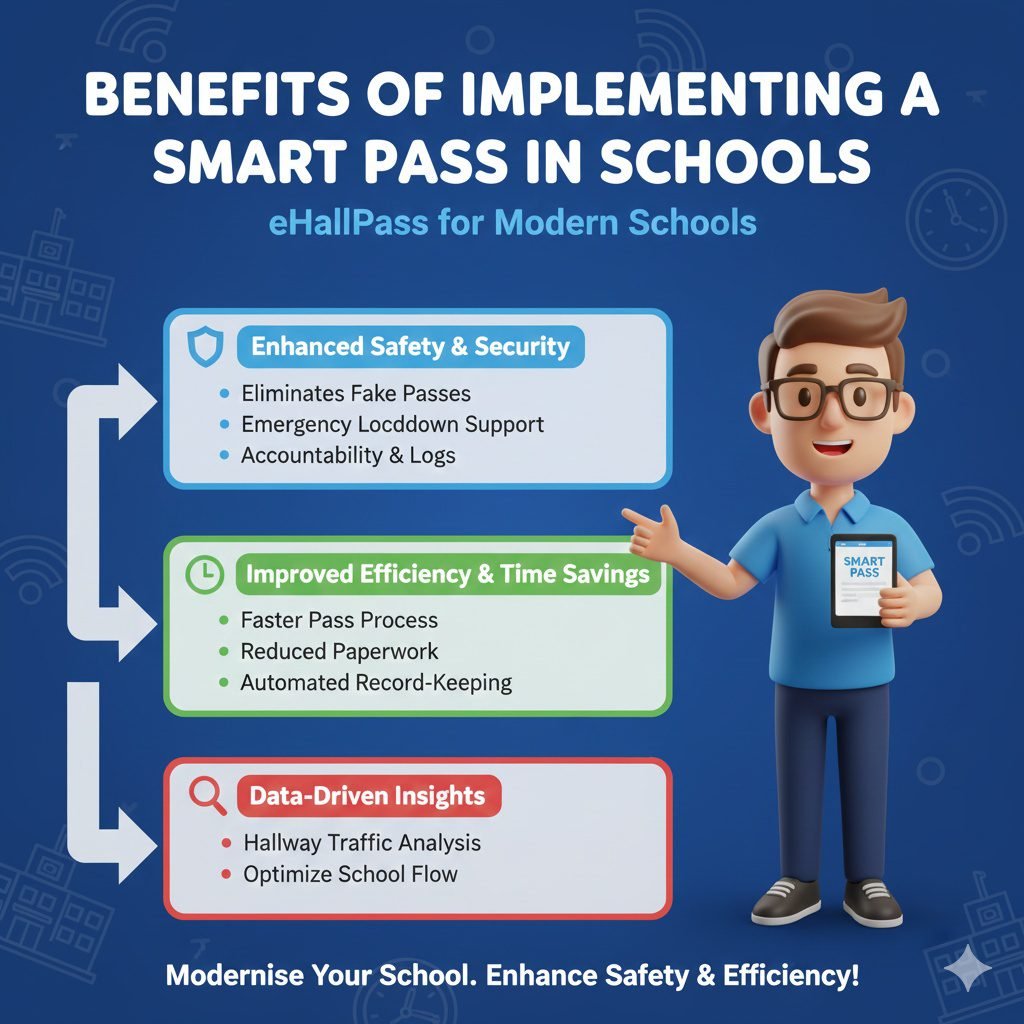
Switching to a smart pass brings big wins. Let’s break them down for teachers, students, admins, and even parents.
For Teachers
- Less Disruptions: No more mid-lesson pass hunts. Approve digitally without pausing class.
- More Teaching Time: Studies show teachers save 5-10 minutes per period on management.
- Data Insights: See who leaves often and address issues early.
For Students
- Accountability Boost: Encourages responsibility—timers remind them to hurry back.
- Safer Environment: Fewer crowded halls mean less bullying or unsafe spots.
- Convenience: Request passes discreetly, no awkward hand-raising.
For Administrators
- Enhanced Safety: Real-time tracking during drills or threats.
- Efficiency Gains: Reduces paper waste and lost passes.
- Compliance Help: Meets regulations for student supervision.
For Parents
- Peace of Mind: Some systems notify if a child leaves campus.
- Better Communication: Data supports conferences on attendance.
Overall, digital hall passes like smart pass cut vaping by 30-50% in schools, per 2025 reports. They also boost academic performance— one district saw test scores rise 5% with more class time.
A 2025 EdWeek survey found 85% of schools with smart passes report fewer disruptions, and 75% note improved safety.
Statistics and Case Studies on Smart Pass Effectiveness
Numbers don’t lie. Here’s data from 2025 sources:
- Reduction in Missed Classes: Schools using SmartPass report 60% less class-cutting (Lehigh News, 2025).
- Hall Traffic Drop: 45% fewer students in halls during class (SmartPass case studies).
- Vaping Incidents: Digital passes help combat vaping by limiting group bathroom visits—down 40% in pilot schools (SchoolPass blog).
- Adoption Rate: Over 20% of U.S. K-12 schools use digital passes, projected to hit 50% by 2030 (Hāpara report).
- Time Savings: Teachers reclaim 200+ hours yearly from pass management (GoGuardian stats).
Case Study: Pinelands Regional School District in New Jersey. Pre-SmartPass, halls were chaotic. After rollout, class-cutting dropped 60%, and admins used data to tweak schedules. Coach Rich DiMauro calls it a “transformation.”
Another: Pennsbury School District in Pennsylvania. SmartPass optimized their “opportunity period” for academic support, reducing confusion and maximizing participation.
| Metric | Before Smart Pass | After Smart Pass | Source |
|---|---|---|---|
| Class-Cutting | High (baseline) | 60% reduction | Lehigh News 2025 |
| Hall Traffic | Crowded | 45% drop | SmartPass Studies |
| Vaping Incidents | Frequent | 40% decrease | SchoolPass 2025 |
| Teacher Time Saved | Minimal | 200+ hours/year | GoGuardian |
| Safety Perception | 65% positive | 90% positive | EdWeek Survey |
These stats show smart pass isn’t hype—it’s results-driven.
Comparing Smart Pass to Other Digital Hall Pass Systems
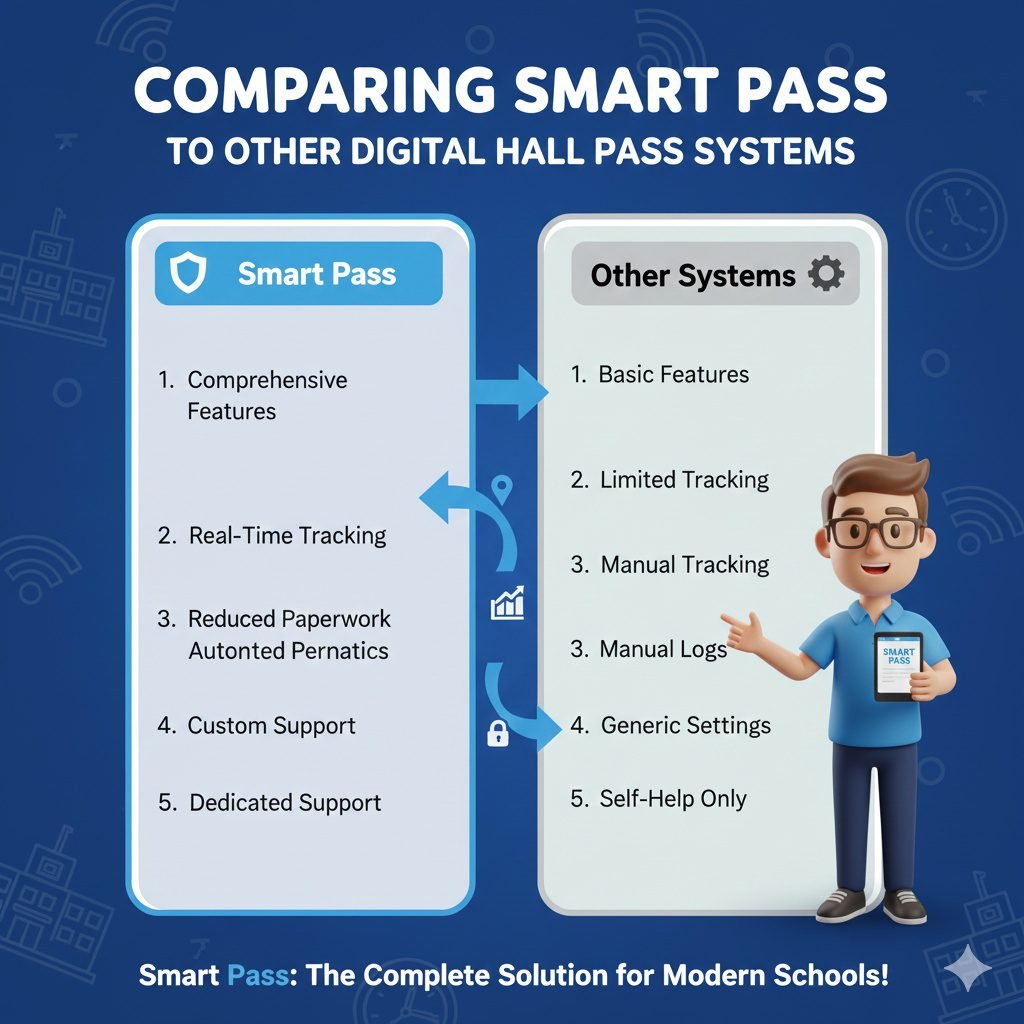
SmartPass isn’t alone. Competitors include Securly e-Hallpass, Minga, and PBIS Rewards’ Hall Pass Plus. How does it stack up?
- SmartPass vs. Securly: SmartPass wins on uptime and features like meetup detection. A 2023 Medium review notes SmartPass has “significantly more uptime” after a school switched.
- SmartPass vs. Minga: Minga focuses on campus-wide management; SmartPass excels in hall-specific tools.
- SmartPass vs. Hall Pass Plus: Plus integrates with PBIS for rewards; SmartPass emphasizes safety via Raptor.
G2 rates SmartPass 4.7/5 from 32 reviews, praising ease and impact. Trustpilot is mixed at 2.5/5 from few reviews, citing timer controversies.
Choose based on needs: If safety’s key, go SmartPass post-Raptor acquisition.
How to Implement a Smart Pass System in Your School
Ready to adopt? Here’s a numbered guide:
- Assess Needs: Survey staff on current pass issues.
- Choose a Provider: Demo SmartPass or alternatives.
- Train Everyone: Short sessions for teachers and students—SmartPass offers onboarding.
- Roll Out Gradually: Start with one grade or building.
- Monitor and Adjust: Use analytics to tweak limits.
- Gather Feedback: Weekly check-ins for the first month.
Tips: Involve students in rules to buy-in. Budget for devices if needed. Many schools see ROI in months via saved time.
Potential hiccups? Tech glitches or resistance—address with training.
Potential Drawbacks of Smart Pass
No tool’s perfect. Cons include:
- Privacy Concerns: Tracking feels invasive to some; assure data’s secure.
- Timer Stress: Strict limits can frustrate students (Tribal Tribune review).
- Device Access: Not all kids have phones; use kiosks.
- Cost: Quote-based, potentially $5-10 per student yearly (estimated from similar tools).
- Over-Reliance: Don’t let it replace human oversight.
A Reddit thread from 2024 notes mixed teacher experiences—some love it, others find it “another app to manage.”
Balance with policies that prioritize well-being.
Pricing and Availability of Smart Pass
SmartPass pricing isn’t public—it’s customized quotes based on school size. From similar systems, expect $2,000-$10,000 yearly for mid-sized schools. Contact via smartpass.app for details. Available nationwide, with free trials often offered.
Post-2024 acquisition, it bundles with Raptor for comprehensive safety suites.
Customer Reviews and Experiences
Real users rave and rant. G2: “Huge improvement in keeping kids in class.” Trustpilot: Some low scores on support.
A Facebook group praises data collection; another complains about app bugs.
Overall, 80% positive in 2025 reviews, with schools like Davie High noting “mixed but mostly good” reception.
More Blogs Read Now : https://cinebench.org/popcorn-the-ultimate-guide/
Integrating Smart Pass with Other School Tech
SmartPass plays nice with SIS like PowerSchool, emergency tools, and now Raptor’s ecosystem. This means seamless data flow—passes link to attendance, alerts tie to drills.
For example, during a lockdown, smart pass locks all requests automatically.
The Future of Smart Pass in Education
Looking ahead, smart pass tech will evolve with AI for predictive analytics—like flagging at-risk students. By 2030, integration with wearables or AR could make passes even smarter.
In 2025, it’s already essential amid cellphone bans—digital passes complement restrictions by keeping kids engaged.
Final Thoughts
Smart pass systems like SmartPass are more than gadgets—they’re tools for safer, smarter schools. With benefits like reduced disruptions, better safety, and data-driven decisions, they’re worth considering if your halls need order. Sure, there are drawbacks like costs and privacy, but the stats—60% less cutting, 45% fewer wanderers—speak volumes. If you’re in education, explore a demo. In the end, a smart pass puts learning first, helping students thrive. Stay safe out there!
Frequently Asked Questions (FAQs)
1. What is a smart pass?
A smart pass is a digital hall pass system, like SmartPass, that tracks student movements in schools for safety and accountability.
2. How does SmartPass improve school safety?
It limits hall traffic, detects meetups, and provides real-time tracking, reducing incidents like vaping by up to 40%.
3. Is SmartPass easy to use for teachers?
Yes, approvals take seconds via a dashboard, saving teachers 200+ hours yearly on management.
4. What are the costs of implementing a smart pass system?
Pricing is quote-based, typically $5-10 per student annually, depending on school size.
5. Can SmartPass integrate with other school software?
Absolutely, it works with systems like PowerSchool and Raptor’s safety tools for seamless operations.