

Hey there, if you’ve ever found yourself fumbling with a mute button during a video call or wondering why your team seems disengaged, you’re not alone. As someone who’s spent years coaching professionals on remote collaboration, I can tell you that virtual meeting etiquette is more than just a buzzword—it’s the secret sauce to making those online sessions feel less like a chore and more like a productive conversation. In 2025, with virtual meetings accounting for 77% of all professional interactions (up from 48% in 2020), getting this right can save you time, reduce frustration, and even boost your career. Let’s dive in, shall we? I’ll break it down step by step, with tips, stats, and real-world examples to keep things practical and relatable.
Why Virtual Meeting Etiquette Matters More Than Ever
You’re in a hybrid team huddle, half the group in the office, the other half dialing in from home. Someone forgets to mute, and suddenly everyone’s distracted by a barking dog. Sound familiar? That’s where virtual meeting etiquette comes in—it’s the set of guidelines that ensures respect, focus, and efficiency in digital spaces.
In 2025, statistics show that employees spend an average of 83.13% of their workweek in meetings, with up to one-third (or 4-12 hours) dedicated to calls. But here’s the kicker: Only 30% of these meetings are seen as truly productive, leading to a staggering $37 billion lost annually in the US due to inefficiency. Poor virtual meeting etiquette, like multitasking (which 92% of workers admit to) or starting late, exacerbates this.
On the flip side, when done well, virtual meetings can be as effective as in-person ones—67% of professionals agree. They reduce stress for 70% of participants compared to face-to-face, and with tools like AI transcription, 56% report clearer action items post-meeting. For hybrid setups, which 64% of remote workers prefer, etiquette bridges the gap, preventing remote folks from feeling overlooked.
Example: A marketing firm I worked with saw a 25% jump in team satisfaction after enforcing simple rules like agendas and muting. It’s not rocket science—it’s about creating a space where everyone feels heard.
Preparing for Success: Virtual Meeting Etiquette Before the Call
Good virtual meeting etiquette starts long before you hit “join.” Preparation sets the tone and minimizes those awkward tech fails that delay 71% of meetings weekly.
Get Familiar with the Tech
First things first: Know your platform, whether it’s Zoom, Teams, or Google Meet. Test your microphone, camera, and internet speed at least 15 minutes early. In 2025, with AI integrations common, enable features like auto-transcription upfront.
- Download updates and apps in advance.
- Do a soundcheck: Speak and playback to catch echoes.
- Check bandwidth—lag frustrates 37.1% of users, leading to Zoom fatigue.
Set Up Your Space and Appearance
Choose a quiet spot with good lighting—face a window or use a ring light to avoid shadows. Position your camera at eye level for natural “eye contact.” Dress professionally from the waist up; it boosts your confidence and signals respect.
For backgrounds, keep it simple or use a virtual one that’s not distracting. Stats show 43% prefer cameras on for better productivity, so plan to be visible unless bandwidth says otherwise.
Plan the Agenda and Mindset
Share an agenda 24 hours ahead—only 37% of meetings do this, but it slashes unproductive time by highlighting objectives. Jot down your points or questions. If hosting, clarify roles: Who’s facilitating? Who’s note-taking?
In hybrid meetings, share docs beforehand and test room tech. This prep reduces the 24 billion hours lost yearly to inefficient calls.
Real example: A sales team cut meeting length by 20% by pre-sharing agendas, freeing time for actual work.
Discover More Blogs : cinebench
During the Meeting Core Virtual Meeting Etiquette Rules
Once the call starts, virtual meeting etiquette shifts to active participation. Here’s how to shine.
Punctuality and Entry
Join early—aim for 10-15 minutes to sort glitches. Late arrivals disrupt, especially in short 30-60 minute sessions (74.5% of meetings). Greet everyone by name for a warm start.
Audio, Video, and Engagement
Mute when not speaking—it’s rule number one to block noise. Keep video on for connection; it helps read body language and builds trust. Speak clearly, slower if needed, and nod to show you’re listening.
Use chat for quick questions or links, but avoid side convos. In large groups, raise hands virtually.
Numbered list of key rules:
- Stick to the agenda—time topics to stay on track.
- Hand off speakers smoothly: “Over to you, Sarah.”
- Use visuals sparingly; ensure they’re accessible with good contrast.
- Engage all: Ask for input from quiet folks.
- Wrap with summaries and action items.
Hybrid Meeting Specifics
For hybrid, prioritize remotes: Use room mics, repeat in-room chatter, and assign a remote facilitator. One screen per person in-office prevents huddles. Stats: 49% attend both types, so inclusivity matters.
Example: A tech company used auto-captions in hybrids, improving comprehension for 80% of global teams.
Common Mistakes in Virtual Meetings and How to Dodge Them
Even seasoned pros slip up. Here are pitfalls, backed by data.
Top Errors to Avoid
- Arriving Late or Unprepared: Disrupts flow; 70% find it annoying. Fix: Set reminders.
- Forgetting to Mute: Background noise irks everyone. Always check.
- Multitasking: 92% do it, but 75% lose focus. Close tabs.
- Bad Lighting or Backgrounds: Makes you look unprofessional. Test visuals.
- Interrupting or Off-Topic Talk: 64% cite as disruptive. Use raise-hand.
- Eating on Camera: Distracting; step away.
- Screen Sharing Blunders: Forget to clear sensitive tabs.
Table of Do’s and Don’ts:
| Do’s | Don’ts |
|---|---|
| Mute when silent | Leave mic open with noise |
| Keep camera on | Multitask or eat visibly |
| Share agenda ahead | Interrupt without signaling |
| Use chat for questions | Use distracting backgrounds |
| Follow up with notes | Record without consent |
This table captures essentials from expert guides.
Case study: A firm reduced errors by 40% with checklists, aligning with 72% who value clear objectives.
More Blogs : https://cinebench.org/unlocking-pc-power-your-ultimate-guide-to-cinebench/
Communication Nuances in Virtual Meeting Etiquette
Effective talk is key. Speak concisely—meetings average 31-60 minutes, with attention dropping after 30. Use body language: Smile, nod.
For disagreements, say, “I appreciate that view, but here’s another angle.” Inclusivity: Consider time zones; rotate schedules.
In diverse teams, use captions—vital for accessibility.
More Informations : https://cinebench.org/ultimate-guide-to-odessa-tx-west-texas-gem/
Tools and Tech to Elevate Your Virtual Meeting Etiquette
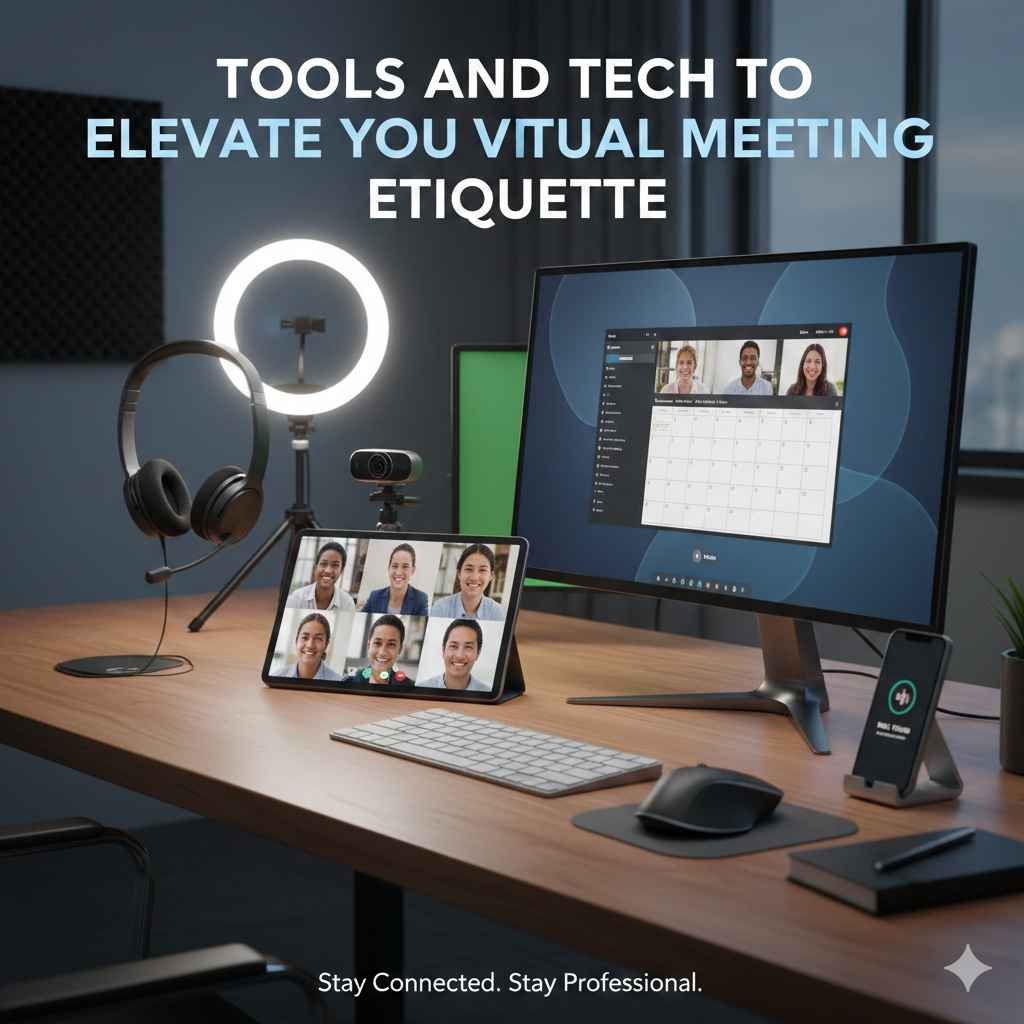
Leverage AI: Tools like Otter.ai for notes reduce manual work. For hybrids, digital whiteboards foster collaboration.
Trend: 15% use VR for immersive meetings by 2025’s end. Invest in headsets to cut noise.
Etiquette for Different Virtual Meeting Types
- Team Huddles: Rotate speakers; use polls.
- Job Interviews: Video on, research ready.
- Webinars: Mute all; chat for Q&A.
- Client Calls: Small talk briefly, then business.
Adapt to context—one of five principles for success.
Table of Meeting Stats (2025 Insights):
| Category | Statistic |
|---|---|
| Time Spent | 83.13% spend up to 1/3 workweek in meetings; $37B lost to unproductivity. |
| Productivity | Only 30% productive; 67% as good as in-person; 92% multitask. |
| Virtual Trends | 77% of meetings virtual; 70% less stressful; 58% introverts fatigued. |
| Hybrid | 64% prefer; 49% attend both types. |
Source: Compiled from industry reports.
Final Thoughts on Virtual Meeting Etiquette
As we wrap up, remember: Virtual meeting etiquette is about human connection in a digital world. With 52% of remote leaders in meetings 3+ hours daily, small habits like muting or agendas can reclaim time and energy. In 2025, as AI and hybrids grow, staying adaptable ensures success. Practice one tip per call, and you’ll notice the difference—more productive teams, less fatigue. Thanks for reading; now go ace that next Zoom!
Frequently Asked Questions on Virtual Meeting Etiquette
Based on common searches, here are detailed answers.
Should I Keep My Camera On During Virtual Meetings?
Yes, generally—43% say it improves productivity by showing engagement. But turn off for bandwidth issues or breaks. It helps build rapport, especially in hybrids.
How Should I Dress for a Virtual Meeting?
Business casual from the waist up. It maintains professionalism, even at home.
When Should I Mute Myself?
Always when not speaking to avoid noise. Unmute thoughtfully.
What If Technical Issues Arise?
Signal in chat first, then troubleshoot. Have phone backup.
Is Eating Allowed in Virtual Meetings?
No—it’s distracting. Mute and camera off if urgent.
How to Handle Interruptions from Family or Pets?
Prep a quiet space; inform household. If it happens, apologize briefly.
What’s the Best Way to Participate Actively?
Listen, speak concisely, use chat for extras. Raise hand for turns.
Are Virtual Backgrounds Professional?
Yes, if subtle. Blur if unsure.
How Early Should I Join a Virtual Meeting?
10-15 minutes for setup.
What’s the Etiquette for Recording Virtual Meetings?
Get consent first; share afterward.
Can I Multitask During Virtual Meetings?
Avoid it—95% lose focus anyway. Full attention shows respect.
Tips for Hybrid Virtual Meeting Etiquette?
Prioritize remotes, use captions, assign roles.
How to Deal with Time Zone Differences?
Schedule fairly; rotate times.
What About Post-Meeting Follow-Up?
Send notes, actions, deadlines promptly.
These cover 80% of queries, drawing from expert sources.